
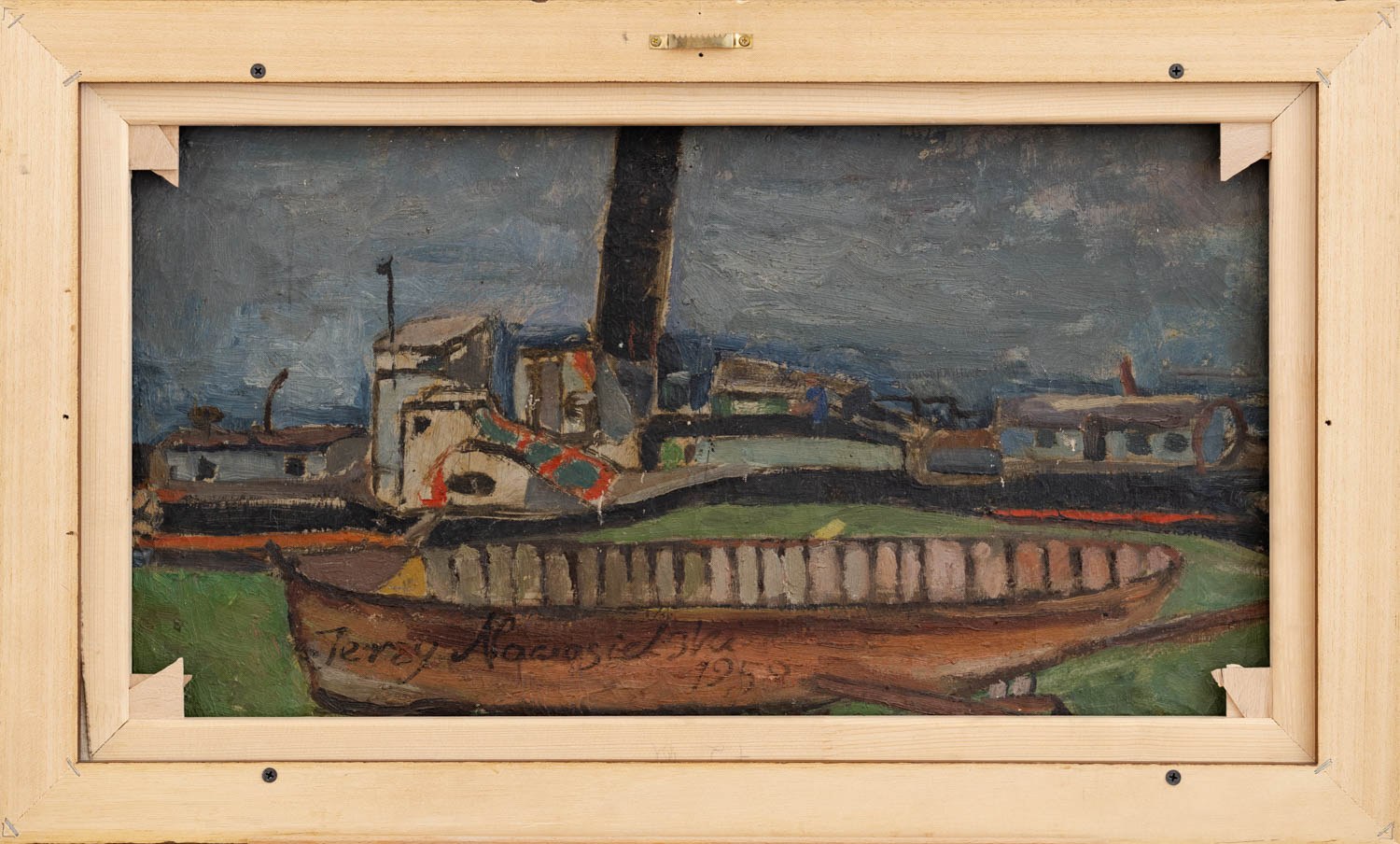
olej, płótno; 42 x 72 cm;
sygn. i dat. na odwrocie: Jerzy Nowosielski 1958;
na odwrocie pejzaż autorstwa Zofii Gutkowskiej-Nowosielskiej.
Obraz jest skatalogowany
w archiwum Fundacji Nowosielskich.
PROWENIENCJA:
- Jerzy Nowosielski Foundation;
- Kolekcja prywatna, Polska.
- Zakup na aukcji w ANS AZURA (26.05.2022, poz. kat. 7);
- Kolekcja prywatna, Polska.
W rozmowie z Elżbietą Dzikowską Nowosielski relacjonuje: „Najpierw zostałem wprowadzony w sztukę nowoczesną. Miałem wówczas 15 lat i pamiętam, że dzięki pewnemu znajomemu architektowi dokonało się
we mnie – zaledwie w ciągu godziny! – otwarcie na rozumienie, a przede wszystkim na odczuwanie sztuki. Było to wspaniałe uczucie.
Wkrótce po tym niezwykłym wydarzeniu znalazłem się w lwowskim muzeum ikon […]”. W latach 40. i 50. XX wieku malarz pozostawał
w kręgu oddziaływania Tadeusza Kantora i przyszłej II Grupy Krakowskiej. Wśród twórców związanych ze środowiskiem krakowskim
można odszukać analogie związane z abstrakcją geometryczną ujętą w liryczną formę. W ten sposób na przykład temat trójkątnych
obiektów w przestrzeni potocznie zwanych „lejkami” pojawia się w pracach Andrzeja Wróblewskiego, Jerzego Tchórzewskiego
czy właśnie Jerzego Nowosielskiego z przełomu lat 40. i 50. XX wieku. Na tym etapie twórczości w abstrakcyjnych obrazach Jerzego Nowosielskiego brak jeszcze charakterystycznej bordiury oddzielające strefę sacrum, jak dzieje się to w ikonach, lecz sama kolorystyka
dzieła, zrezygnowanie z fakturalności w obrazie nawiązują już do dojrzałych dzieł malarza, w których uwypuklony element sacrum (nie należy mylić z religijnością) można odnaleźć w licznych obrazach. Jak
wspomina Roman Kaczkowski: „Dla Nowosielskiego nawet obrazy abstrakcyjne były ikonami, ale nie tyle ze względu na formę, co samą intencję, idee wpisaną w dzieło sztuki”. Lata 40. i 50. XX wieku to dla Jerzego Nowosielskiego moment wzmożonej pracy twórczej oraz
licznych poszukiwań artystycznych. Natomiast 2. połowa lat 50. oraz początek lat 60. XX wieku to czas licznych wystaw oraz pochlebnych recenzji prezentowanych dokonań. Licząc od 1956 roku – schyłkowego etapu doktryny socrealistycznej w malarstwie polskim – Jerzy Nowosielski reprezentował kraj na Biennale w Wenecji w 1956 roku
oraz Biennale w São Paulo w 1959 roku. W roku 1960 jego obraz „Wiolonczelista” był nominowany do nagrody Solomona Guggenheima
w Nowym Jorku. W 1963 roku została natomiast zorganizowana wielka ekspozycja prac malarza w warszawskiej Zachęcie. „Maluję z musu! Kiedy czegoś nie umiem już napisać, nie umiem inaczej tego uzewnętrznić – no to maluję! Bo malarstwo zaczyna się tam,
gdzie wszystkie inne sposoby przekazu – od człowieka do człowieka – stają się bezsilne”.
Jerzy Nowosielski
[za: Najprostszą drogą. Rozmowy z artystami.
Barbara Ziembicka, Kraków 1998, s. 28.]











Laatst bekeken
Log in om de kavellijst in te zien
Favorieten
Log in om de kavellijst in te zien